On this page
A nail in a tire does not automatically mean buying a new tire. The first question is whether the tire qualifies for repair after inspection, followed by the cost of obtaining that repair. A free service can be valuable when the injury meets the limits; it cannot make shoulder damage or a compromised tire safe to retain.
This guide uses industry repair criteria, federal tire guidance and a retailer’s own service offer checked in October 2026. It separates an in-store repair from roadside recovery and from replacing a tire. A low repair price is a cost comparison, not a way to decide whether a damaged tire is safe to drive.
Key figures
- 6 mm Maximum puncture diameter for eligible tread repairs
- $0 Discount Tire repair, if the puncture qualifies
Repair has a location and a quarter-inch limit
USTMA says repair should be considered only when the injury is limited to the tread area and its diameter does not exceed ¼ inch, or 6 mm. Damage extending into the shoulder or belt edge is excluded, including an angled injury that reaches that area. The exterior location does not show the whole path of the injury.
| Repair criterion | Published limit or requirement | Decision effect |
|---|---|---|
| Injury diameter | No larger than ¼ inch / 6 mm | A larger injury falls outside the repair guidance |
| Injury location | Repairable tread area only | Shoulder or sidewall location is not the same case |
| Internal inspection | Tire removed from wheel | Exterior appearance alone is insufficient |
| Repair construction | Injury filled and inner liner patched | An outside plug alone is unacceptable |
| Existing repairs | No overlap; no earlier improper repair | Past work can rule out another repair |
Source note: USTMA’s tire-repair basics and passenger/light-truck repair guidance. The limits do not guarantee acceptance; manufacturer restrictions and internal condition still apply.
For example, a 5 mm tread injury is below the size ceiling, while an 8 mm injury exceeds it. These are size illustrations, not assessments of a real tire. The smaller injury can still fail inspection because of its path, location or damage caused while underinflated.
A free in-store offer does not include every expense
Discount Tire advertises free repair for most repairable punctures, including tires purchased elsewhere, after inspection under USTMA criteria. Its offer gives the repair service a $0 advertised price for eligible tires. It does not establish a $0 total for towing, a replacement tire, an unrelated sensor repair or every service a store might recommend.
Confirm the local store’s availability before arranging transport. Its separate mobile-service page says it does not offer mobile tire repair. A paid mobile new-tire installation service should therefore not be confused with its free in-store puncture service.
In a hypothetical case, a $90 towing charge plus eligible $0 repair leaves $90 spent to restore mobility. If the tire is rejected and an assumed replacement-and-installation quote is $220, that same tow makes the total $310. The $90 and $220 figures are assumptions, not Discount Tire’s towing or tire rates. They demonstrate why a free repair advertisement cannot answer the whole breakdown budget.
The roadside-plan guide compares towing benefits and exclusions. Coverage for bringing the car to a shop and the shop’s price for repairing its tire belong on separate lines.
Internal damage and tread can require replacement
Driving while a tire is flat or seriously underinflated can change the inspection outcome even if the puncture itself looks small. Describe what happened, including whether the vehicle was driven after pressure loss and whether a sealant or temporary repair was used. The technician needs that history when inspecting the inside.
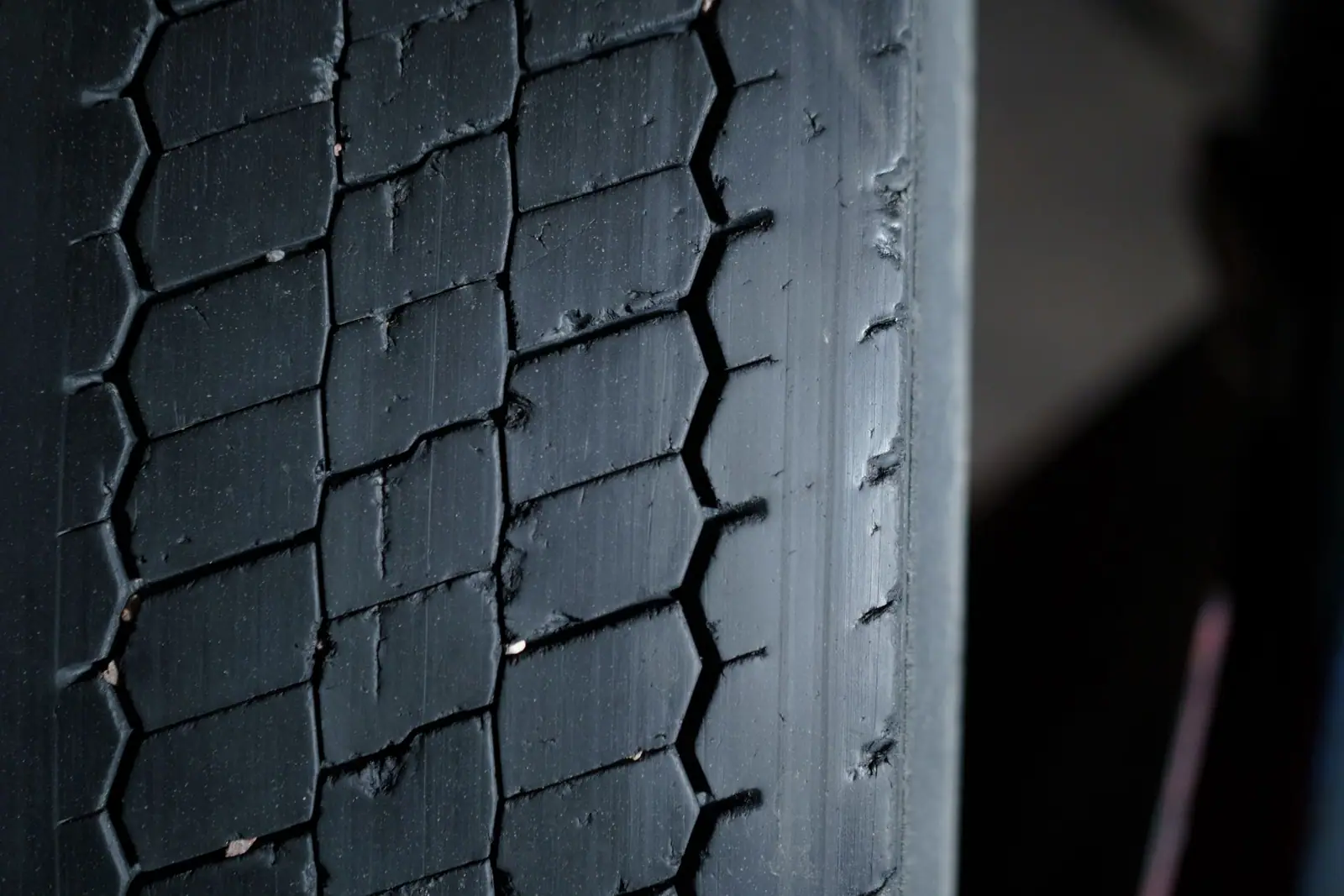
NHTSA says tread worn down to 2/32 inch is unsafe and calls for replacement. An assumed measurement of 4/32 leaves 2/32 above that limit; it is not a promise of a particular number of remaining miles. Wear rate, conditions and damage determine the tire’s remaining usefulness, and a tread measurement does not erase sidewall problems.
The worn-tire guide covers the separate replacement decision. If a puncture inspection also finds worn tread, ask the shop to show both findings rather than presenting the puncture as the sole reason for a tire sale.
Manufacturer restrictions can be more limiting for certain tire designs, including some run-flat tires. Ask which repair policy applies to the installed tire. A claim that every run-flat is repairable, or that none ever is, skips the manufacturer’s conditions and the inspection.
Road-hazard protection is a separate contract comparison
Discount Tire’s service page describes its optional Certificate program as covering qualifying nonrepairable road-hazard damage when the tire has more than 3/32 inch of tread and is within three years of purchase. Those conditions concern that program, not the general limit for an ordinary puncture repair or every tire manufacturer’s warranty.
Read the certificate for the tire and purchase before assuming replacement will be free. Ask which installation costs, fees and other charges remain, whether a claim uses the original purchase value and what happens if the same tire is unavailable. A manufacturer’s defect warranty and an optional road-hazard contract address different events.
For an assumed $180 tire plus $30 installation and $10 other charges, replacement totals $220. If a hypothetical contract covers only the tire, $40 remains. If its terms cover more, the retained amount changes. This calculation illustrates why the word “covered” should be translated into the customer’s final bill rather than assumed to mean every charge disappears.
The finished job and next pressure check matter
Ask the invoice to identify whether the tire was repaired or replaced and what separate services were charged. A plug-only description deserves clarification against USTMA’s combined injury-fill and inner-liner sealing guidance. Keep the record if the same tire later loses pressure again.
NHTSA recommends checking pressure at least monthly when tires are cold, meaning the car has not been driven for at least three hours. Use the vehicle’s placard or manual pressure, rather than the tire sidewall’s maximum. A warning system does not replace those checks. This routine helps detect later loss; it does not establish that a tire which repeatedly loses pressure is ready for continued driving.
Follow the vehicle’s instructions, move out of traffic when possible and arrange professional help for a damaged or flat tire. Do not keep driving to reach a free repair offer or attempt wheel work beside moving traffic.
The maintenance budget guide separates planned tire replacement from an unexpected puncture and recovery expense. If a repair preserves a tire that was not already due for replacement, keep the future tire allowance rather than treating the repair as a reason to remove it.
Questions people ask
Can a tire with a nail always be repaired?
No. USTMA limits the injury to the tread and no more than ¼ inch or 6 mm, with internal inspection and other restrictions. Location, internal damage and the manufacturer's policy also matter.
Is Discount Tire repair free if the tire was bought elsewhere?
Its own offer says free repair is available for most repairable punctures even on tires bought elsewhere, subject to inspection and USTMA criteria. Confirm service at the local store.
Is an outside plug a finished repair?
USTMA says the tire must come off the wheel for inspection and the injury must be filled while the inner liner is patched. An outside plug alone is not its recommended repair.
Does free repair cover towing or a rejected tire?
The in-store repair offer does not establish free recovery or replacement. Those charges and any road-hazard coverage need their own quote and terms.
Where these figures come from
- Tire Repair Basics and Limits US Tire Manufacturers Association · ustires.org
- Free In-Store Flat Repair and Eligibility Discount Tire · discounttire.com
- Mobile Installation: No Mobile Tire Repair Discount Tire · discounttire.com
- TireWise: Tread and Pressure Guidance National Highway Traffic Safety Administration · nhtsa.gov
Figures last checked October 2026.