On this page
The check engine light is the most misunderstood thing on a dashboard. It is neither an emergency nor a suggestion. It means the car’s diagnostic system has detected a fault that affects emissions, and it has stored information about what it saw.
The California Air Resources Board, which wrote the regulation the whole industry follows, describes the system directly: the on-board computer monitors virtually every component that can affect emissions performance, and illuminates a warning light when a diagnostic routine finds a problem.
Key figures
- 8 years Federal major-emissions warranty, time limit
- 80,000 miles Federal major-emissions warranty, mileage limit
Steady or flashing
This is the only part you need to react to immediately.
- Steady light. Most manufacturers advise having the vehicle serviced as soon as is convenient. The fault will often show up as a change in fuel economy or drivability, and driving on with it can damage other components.
- Flashing light. CARB is specific: certain malfunctions cause the light to blink, which indicates a fault that could be damaging the catalytic converter. Because replacing a catalyst is expensive, manufacturers recommend service as soon as possible.
A flashing light usually means a misfire dumping unburned fuel into the exhaust. Reduce load, keep the speed down, and get it looked at rather than finishing the road trip.
What your car has, and since when
All 1996 and newer model year petrol and alternative-fuel cars and light trucks sold in the United States are required to have OBD II, and diesels from 1997. A small number of 1994 and 1995 cars had it early. The EPA requires OBD in every state, and in practice nearly all cars sold in the US are built to meet California’s version regardless of where they are sold.
That standardisation is the reason a $30 code reader works on any car in the driveway and the reason an independent shop can diagnose your car as well as a dealer.
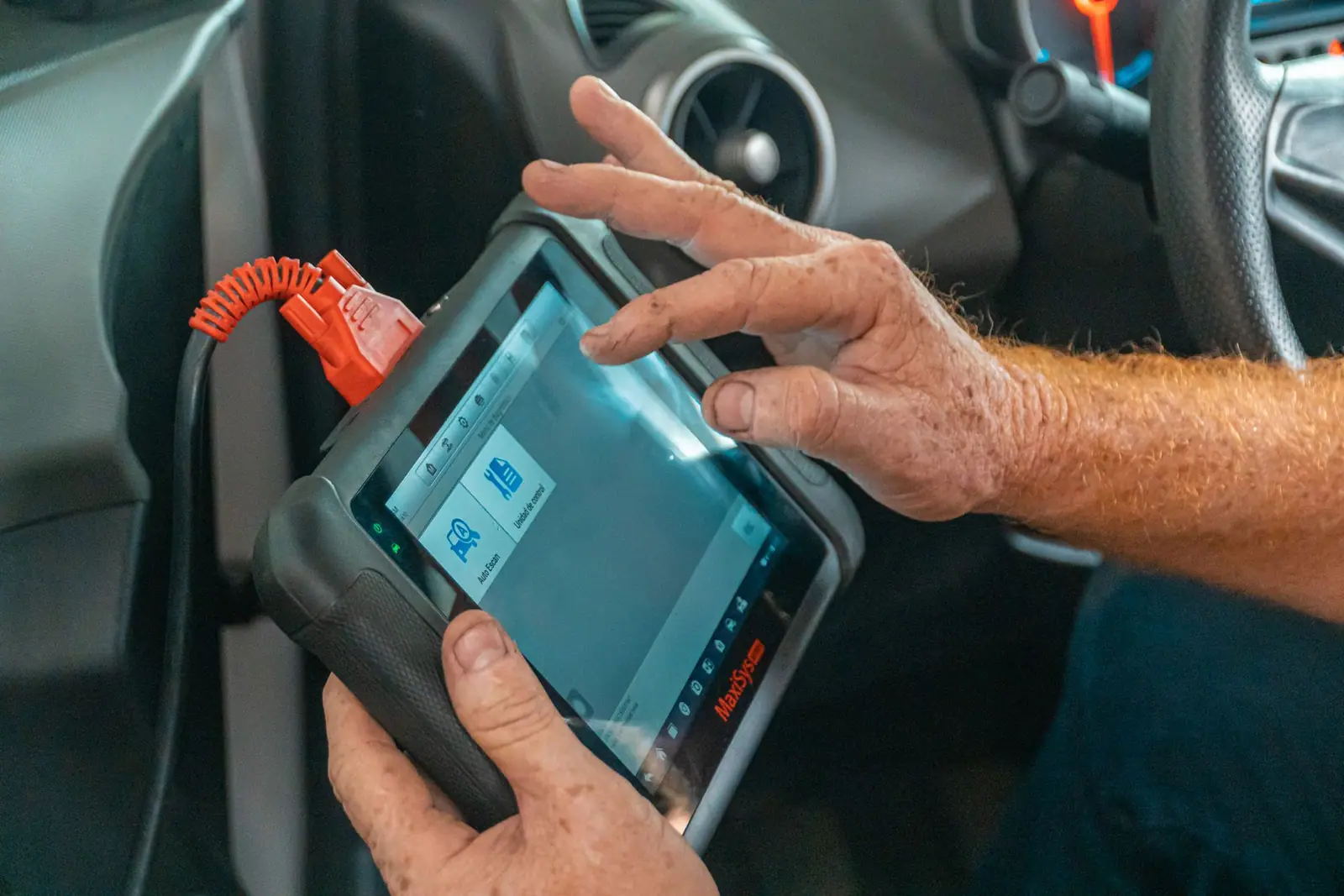
The code is not the diagnosis
A stored code identifies the monitor that failed, which is usually a reading outside its expected range. Take the most common example: a code for the oxygen sensor circuit does not mean the sensor is faulty. The sensor may be reporting accurately about a vacuum leak, an exhaust leak or a fuel mixture problem upstream.
This is why “the parts shop read the code and said I need a sensor” is an expensive habit. A proper diagnosis costs an hour of labour and replaces the right part once.
Two codes are worth knowing because they are cheap:
- A loose or failed fuel cap can trigger an evaporative system code on many cars. Tighten it, and the light may clear itself after several drive cycles.
- A misfire code on a single cylinder is often an ignition coil or a spark plug, which are inexpensive compared with the catalyst damage a prolonged misfire can cause.
Clearing the code also clears the readiness monitors, the self-tests the car runs as you drive. If your state’s inspection is OBD-based, a car with incomplete monitors fails the inspection even with no light showing. Do not clear codes shortly before an emissions test: drive the car for a few days first so the monitors can run.
Check who owes you the repair before you pay
Emissions parts carry warranties much longer than the rest of the car.
- Federal. Specified major emission control components, which include catalytic converters and the emission control module, are warranted for 8 years or 80,000 miles. Other emissions parts get two years or 24,000 miles.
- California. Any problem the OBD II system detects is covered for 3 years or 50,000 miles, and components above a defined cost threshold, currently around $600, are covered for 7 years or 70,000 miles. Partial and transitional zero emission vehicles are covered for 15 years or 150,000 miles on faults the system detects, and their energy storage devices for 10 years.
Those are the manufacturer’s obligations, running from the in-service date rather than from the date you bought the car. Before you authorise a catalytic converter, check the date and the odometer.
Inspection consequences
In states with OBD-based emissions testing, a light on the dash is an automatic failure. California, for example, bases the smog check for 2000 and newer vehicles primarily on the OBD II system, with tailpipe testing no longer required for those years; 1996 to 1999 petrol vehicles get both.
Practical consequence: if your registration renewal needs an inspection, deal with the light well before the deadline, not the week of.
What to do, in order
- Look at the light. Flashing means stop driving hard and get it seen now.
- Check the fuel cap if the light appeared just after refuelling.
- Have the codes read, and write them down, including any pending codes and freeze frame data.
- Pay for a diagnosis, not a guess, on anything that is not obviously a cap or a plug.
- Check the warranty dates before agreeing to an expensive emissions part.
- Keep the repair order, which should list each repair, the parts supplied, the cost of each part, the labour charges and the odometer reading.
The maintenance budget keeps diagnosis separate from scheduled services. If the resulting estimate is large, the repair-versus-replacement comparison evaluates it alongside the cost of obtaining another car.
Questions people ask
Can I keep driving with the check engine light on?
If it is steady and the car drives normally, most manufacturers advise service as soon as is convenient rather than immediately. If it is flashing, that indicates a fault that could damage the catalytic converter, so reduce load and get it looked at promptly.
Does a loose gas cap turn on the check engine light?
It can. On many cars a loose or failed fuel cap triggers an evaporative emissions code. Tighten it properly and the light may clear itself after several drive cycles; if it does not, have the codes read.
Do I have to go to the dealer for a check engine light?
No. California's regulator states that properly trained and equipped independent shops can use the OBD II information and make repairs just as dealers do. The exception is work covered under an emissions warranty, which manufacturers authorise only their dealers to perform.
Will clearing the code make my car pass an emissions test?
No, and it usually causes a failure. Clearing codes also resets the readiness monitors, and an OBD-based inspection fails a car whose monitors have not completed. Drive the car normally for several days after any repair before testing.
Where these figures come from
- On-Board Diagnostic II (OBD II) Systems Fact Sheet California Air Resources Board · ww2.arb.ca.gov
- 40 CFR 85.2103, Emission warranty Electronic Code of Federal Regulations · ecfr.gov
- Auto Repair Basics Federal Trade Commission · consumer.ftc.gov
- Keeping Your Vehicle in Shape US Department of Energy and EPA, fueleconomy.gov · fueleconomy.gov
Figures last checked September 2026.